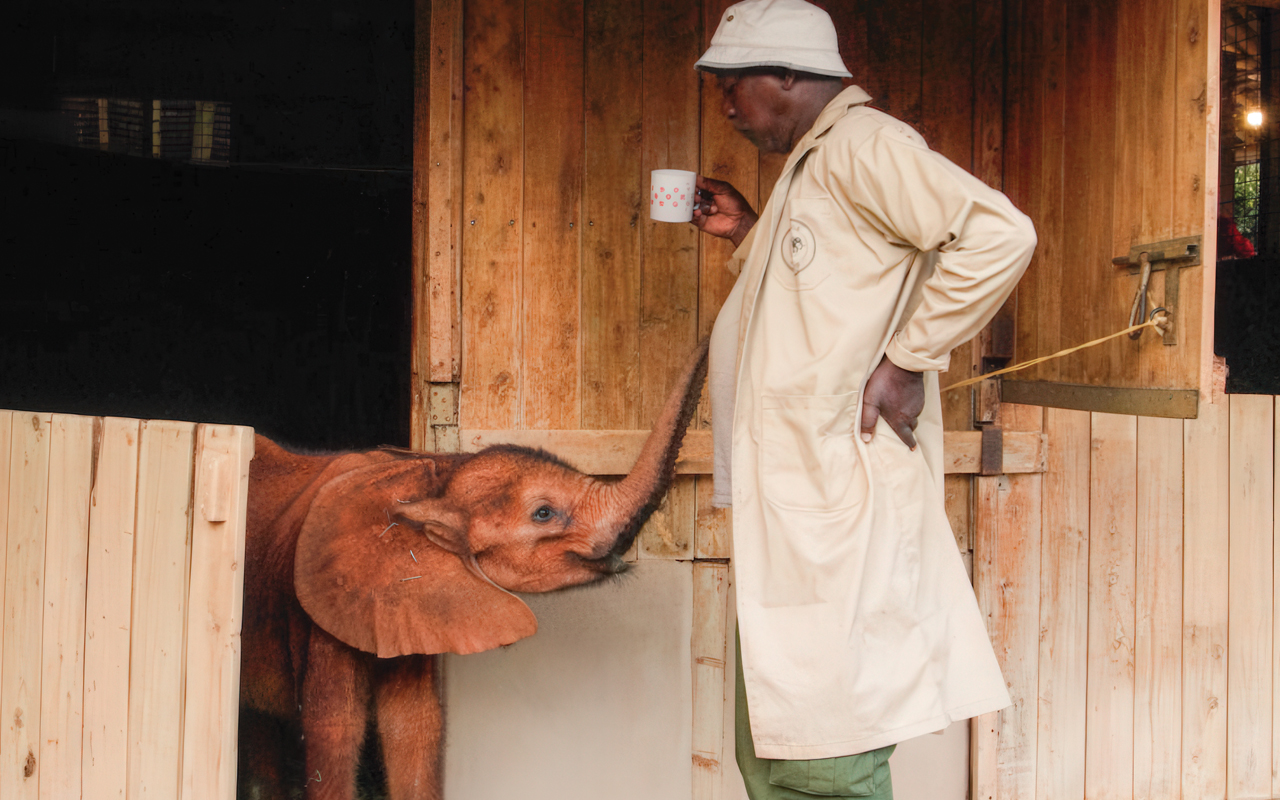
Orphans at Sheldrick Wildlife Trust. Photo courtesy Sheldrick Wildlife Trust

ECOCONSCIOUS 8.26
Prince William
Protecting and Restoring Nature with Earthshot
Baby elephants experience a rich, complex emotional life very similar to human toddlers. Their intelligence makes them capable of deep emotions including profound love, intense joy, and playful mischief, but they are also highly prone to temper tantrums, sadness, and deep grief when separated from their mothers. At the Sheldrick Wildlife Trust in Kenya, Africa, baby elephants, whose mothers have been killed or separated from them, are rescued by highly knowledgeable experts who know that if they do not provide enormous quotients of emotional and physical comfort to the newly-orphaned babies, they will die of grief.
The Emotional Repertoire of Baby Elephants
• Grief and Separation: Deep social bonds are fundamental to elephants. Orphaned calves often cry through the night and exhibit severe anxiety. They require constant physical contact with caretakers acting as a surrogate herd to keep them safe and consoled.
• Playfulness and Joy: Young elephants express joy through games, mock-fighting, and playing harmless pranks. They love engaging in activities like splashing in water and sliding around.
• Tantrums and Frustration: When a baby elephant feels annoyed, overwhelmed, or doesn’t get its way, it will often throw a full tantrum. They stomp their feet, trumpet loudly, or throw dramatic, muddy meltdowns.
• Terror and Trauma: Like human children, baby elephants who witness traumatic events (such as the loss of their families to poachers) can suffer from terror and exhibit symptoms mimicking human Post-Traumatic Stress Disorder.
Pictures courtesy Sheldrick Wildlife Trust. sheldrickwildlifetrust.org
The rescue of ‘Wangalla’ at the Sheldrick Wildlife Trust in Kenya. Photo Courtesy Sheldrick Wildlife Trust